




SUMMARY OF KEY FINDINGS
Background
The relationship between adult-onset hydrocephalus and epilepsy remains poorly characterised. Although epilepsy has been reported in neurodegenerative disorders and in paediatric or shunt-related hydrocephalus,1-3 evidence regarding its occurrence in idiopathic adult-onset hydrocephalus is scarce. This study investigated whether adult-onset hydrocephalus is associated with an increased risk of incident epilepsy.4
Results
Data were obtained from the UK Biobank, a large population-based cohort with approximately 15 years of follow-up.5 The study included 483,790 controls, 5,028 individuals with epilepsy, and 320 individuals with adult-onset hydrocephalus. Logistic regression demonstrated an association between hydrocephalus and epilepsy (OR: 9.6; 95% CI: 6.4–13.8; p<0.001). Among the 29 participants with both conditions, epilepsy preceded hydrocephalus in 44.8% of cases, occurred concurrently in 13.8%, and followed hydrocephalus in 41.4%, as shown in Figure 1. In sampled cohort analyses, adult-onset hydrocephalus was associated with an increased risk of incident epilepsy, with adjusted hazard ratios ranging from 14.62 (95% CI: 7.91–27.00; p<0.001) to 23.80 (95% CI: 12.87–44.03; p<0.001) across different models. The association remained consistent after adjustment for demographic, lifestyle, vascular, and genetic factors, as well as after excluding individuals with Alzheimer’s disease and other neurodegenerative disorders. No participants with both hydrocephalus and epilepsy had undergone shunt treatment.
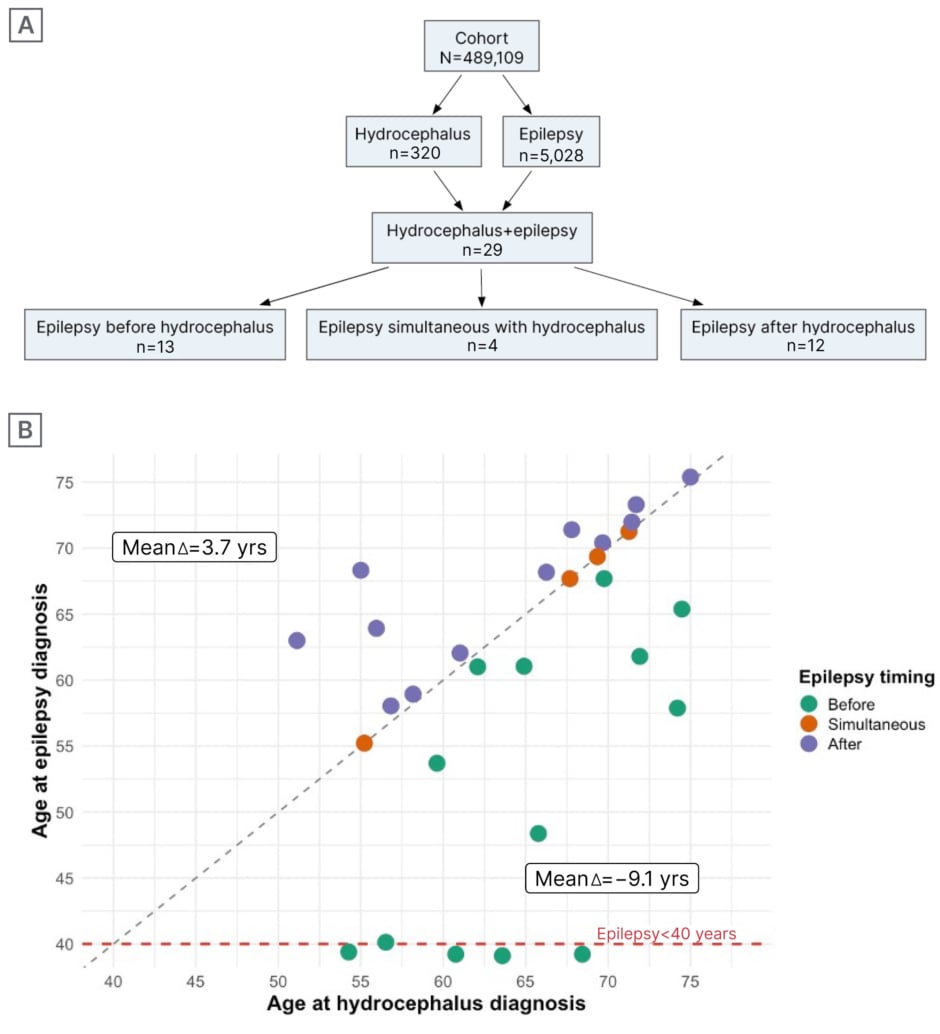
Figure 1: Temporal relationship between adult-onset hydrocephalus and epilepsy diagnoses.
A) The classification of participants with both hydrocephalus and epilepsy (n=29) according to the relative timing of diagnoses: epilepsy preceding hydrocephalus (n=13), diagnosed in the same year (n=4), or following hydrocephalus (n=12). B) Scatter plot of age at hydrocephalus diagnosis versus age at epilepsy diagnosis for these participants. The horizontal red dashed line marks the exclusion threshold for epilepsy diagnosed at age ≤40 years, reflecting the study’s focus on late-onset cases. Mean age differences (Δ) between conditions are indicated for each group and cases with epilepsy onset before 40 years of age were not included.
Conclusion
These findings suggest that adult-onset hydrocephalus is associated with an increased risk of epilepsy that is not fully explained by vascular risk factors, neurodegenerative comorbidities, or shunt-related complications. The results support consideration of epilepsy in individuals with adult-onset hydrocephalus, particularly when symptoms may be subtle or overlap with cognitive or motor manifestations of the condition. The large sample size, stringent selection criteria, and comprehensive adjustment for potential confounders strengthen the findings.
WHAT CHALLENGE DOES THIS ADDRESS?
Evidence on the relationship between adult-onset hydrocephalus and epilepsy is limited, particularly in adults without secondary causes of hydrocephalus. This study addresses an important evidence gap by examining whether adult-onset hydrocephalus is associated with an increased risk of developing epilepsy over time.
RELEVANCE TO EUROPEAN PRACTICE
These findings may be relevant to clinicians involved in the care of people with adult-onset hydrocephalus. Awareness of a possible association with epilepsy may inform clinical assessment, particularly when patients present with symptoms that could be consistent with seizures. The study also contributes to the evidence base on neurological comorbidities in older adults.
WHAT ARE THE NEXT STEPS FOR THE RESEARCH?
Prospective studies are needed to confirm these findings and to investigate the biological mechanisms linking adult-onset hydrocephalus and epilepsy. Future research incorporating detailed clinical phenotyping, electroencephalography, advanced neuroimaging, and fluid biomarkers may help clarify the nature of this association and its implications for clinical practice.
Disclaimer: This content has not been generated, created or edited by Finance SC. Publisher:
Source link
Source link