



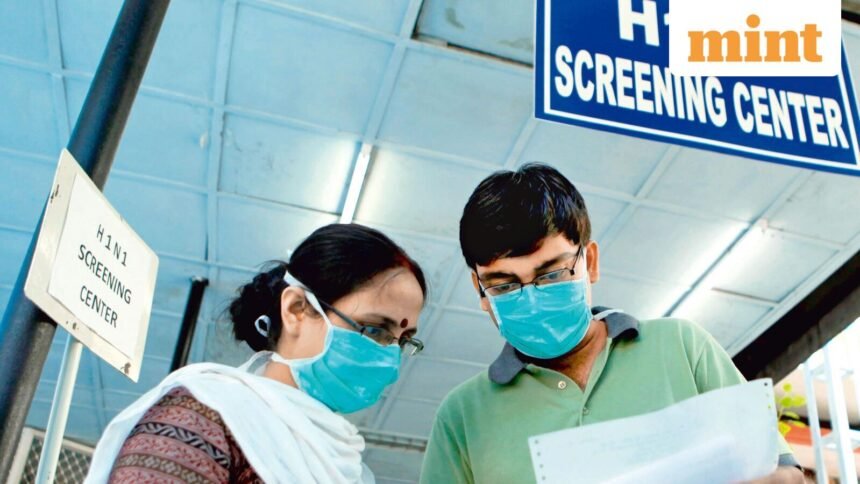
Delhi is witnessing a sharp surge in H1N1 influenza cases this season, with 1,344 infections reported compared to 229 during the same period last year. The nearly six-fold increase is not just a statistical spike — it is a clear signal that influenza is circulating aggressively across the National Capital Region.
Dr Satish Koul, Principal Director and Unit Head of Internal Medicine at Fortis Memorial Research Institute, Gurugram, told ANI that hospitals have witnessed an increase in patients with respiratory symptoms over the past three to four weeks. “Over the past 3-4 weeks, hospitals have witnessed a rise in patients presenting with cough, cold and high fever. Testing has revealed a significant increase in H1N1 (swine flu) cases, with doctors reporting that they are seeing around 7-10 such patients daily in the OPD. There has also been a slight increase in COVID-19 cases,” he said.
However, doctors said that most H1N1 infections are generally mild, with fever typically subsiding within three to five days. They cautioned that elderly people, young children and those with pre-existing conditions such as diabetes, hypertension and heart disease are at higher risk of developing complications.
Symptoms To Watch Out For
Dr Sanjeev Sinha, Professor of Medicine, Department of Medicine, AIIMS Delhi, attributed the rise in influenza cases to seasonal changes during the monsoon. “During monsoon, there’s a decrease in temperature. So, because of the temperature change, the influenza virus is more common nowadays. They have a sore throat, nasal discharge, dry cough and headache,” he said.
He added that vulnerable groups, including the elderly and those suffering from diabetes, hypertension and chronic kidney disease, are more prone to infections. “In our OPD, there is an increased number of patients who are suffering from upper respiratory tract infections, and we found that they are positive for influenza, especially H1N1 and influenza A,” Sinha said.
Advising those diagnosed with H1N1 to take precautions, he said, “If you are diagnosed with it, then isolate yourself at home for two or three days, use a face mask. If you get the infection, immediately contact the doctor about the treatment.”
Dr Atul Kakar, Chairperson, Internal Medicine, Sir Ganga Ram Hospital, told ANI that Delhi is witnessing a seasonal increase in viral respiratory infections, with many patients reporting flu-like symptoms. “Many of them have high-grade fever, which has been running for a few days. A few of them have cold and cough; many of them complain of joint pains, muscle pain, extreme weakness, runny nose and throat pain. This is a type of trend which we are now seeing, especially during this post-rainy season. So, the number of patients is definitely much more,” he said.
Warning Signs That Need Immediate Medical Attention
Kakar further said that children, elderly people and immunocompromised individuals, as well as those with underlying conditions such as chronic obstructive pulmonary disease (COPD), heart disease and kidney disease, are more likely to develop severe symptoms. “A few of them require hospitalisation because of the severity of symptoms. The majority of symptoms are self-limiting and last for about five to seven days,” he said.
Doctors have advised people experiencing pneumonia-like symptoms, persistent high fever or difficulty in breathing to seek medical attention promptly, particularly those belonging to high-risk groups.
Government Advisory: Dos And Don’ts
Authorities have reiterated preventive guidelines for the general public to curb the spread of H1N1. Under the Dos, people are advised to cover their mouth and nose with a handkerchief or tissue when coughing or sneezing, wash hands often with soap and water or use alcohol-based hand gel, avoid touching the eyes, nose or mouth, avoid crowded places, stay more than an arm’s length from those infected, and get adequate rest, sleep and nutrition.
Under the Don’ts, people have been advised to avoid shaking hands or hugging in greeting, avoid taking medicines without consulting a physician, and avoid meeting relatives and friends while symptomatic. Those diagnosed with flu-like symptoms have been asked to monitor their health and report to the nearest health facility if symptoms worsen, including high fever, difficulty breathing, bluish discolouration of the skin or lips, or blood in sputum.
Disclaimer: This content has not been generated, created or edited by Finance SC. Publisher:
Source link
Source link