



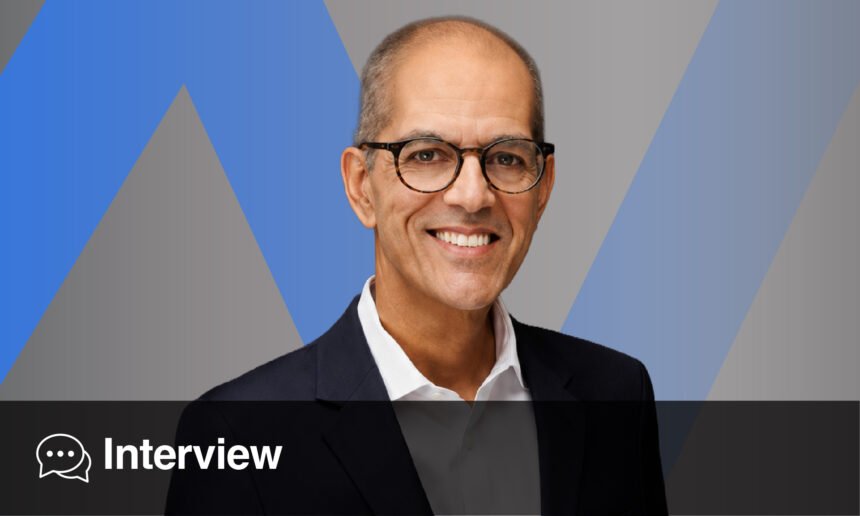
Your work spans clinical oncology, stem cell biology, public health leadership, and healthcare policy. How have those different domains influenced the way you think about cancer care, not simply as treatment, but as a systems-level challenge involving access, prevention, and long-term outcomes?
Moving back and forth among the bedside, the laboratory, and the policy arena has given me a wide view of health. As a medical oncologist, I’ve cared for patients with leukemia whose lives depended on highly specialized treatments. As a biologist, I’ve spent years tinkering with molecular mechanisms that drive disease. At the same time, my public service career has given me the opportunity to design and lead health systems that serve millions of Medicaid recipients.
What I’ve learned is that innovation doesn’t end at the laboratory door. A new therapy creates value only when patients can actually receive it. Too often, our innovation ecosystem celebrates FDA approval as the finish line, while neglecting the harder challenge of affordability and access.
Scientists are rewarded for novel findings and grant funding. Investors are rewarded for generating returns and protecting intellectual property. And those incentives have produced remarkable breakthroughs, many of which have transformed cancer care.
What they don’t reward is simplicity, affordability, or broad accessibility. As a result, we often develop therapies that are scientifically elegant but difficult to deliver, requiring specialized infrastructure, highly trained personnel, and prices that strain both public and private healthcare budgets. The burden of solving those implementation challenges is frequently shifted to state Medicaid agencies, health systems, hospitals, and oncology clinics after the innovation is already complete.
Every innovator should ask four questions from the beginning: Can we discover it? Can we build it? Can we get it approved? And can ordinary people actually receive it? The first three questions dominate our innovation ecosystem. The fourth often receives the least attention, despite being the one that ultimately determines societal impact.
History will remember us for inventing cures. We will also be remembered for whether people can reach them.
You have spent much of your career focused on hematologic malignancies such as acute myeloid leukemia (AML), myelodysplastic syndromes, and myelofibrosis, while also helping shape broader healthcare policy through Medicaid and public health leadership. How do you balance innovation in cutting-edge oncology with the realities of delivering equitable cancer care at a population scale?
I don’t see innovation and accessibility as competing priorities. In fact, one of the reasons I entered public service was to use the same scientific skills I had developed in the laboratory and clinic to improve access to health at a larger scale. After 15 years of oncology practice, I wanted to make a broader contribution to society. That required me to lean into the same creativity that had driven my academic discoveries, but to apply it to health systems, policy, and population health.
I saw this tension early in my work with patients with AML and myelodysplastic syndromes. At the time, the dominant mindset was intensive induction and consolidation chemotherapy. Yet I was testing all-oral chemotherapy regimens because I believed access had to be part of the innovation equation. That thinking was shaped heavily by community oncologists in small rural towns who were caring for twice as many patients as I was, and with fewer resources.
Of course, those physicians were interested in molecular pathways and new therapies. But because they practiced in resource-constrained environments, they also asked a different and equally important question of whether a regimen could be delivered to real patients in real communities. They needed treatments that were as accessible as they were effective.
That experience has stayed with me. The ultimate test of innovation is whether it can improve outcomes for patients across diverse communities, including those served by Medicaid, rural health systems, and safety-net providers. To me, equitable cancer care means designing innovation with delivery in mind from the beginning.
Recent oncology studies in the US have highlighted the growing role of measurable residual disease (MRD) testing in AML and its ability to guide treatment intensity and transplant decisions. How do you see MRD reshaping clinical decision-making in hematologic oncology, and what challenges remain before it becomes universally integrated into care pathways?
MRD is one of the most important advances I’ve witnessed in AML during my career. It’s amazing to consider that the microscope, invented in the 1590s, was the cornerstone of AML and myelodysplastic syndromes diagnosis and treatment assessment even into the early 2000s. We now know that many patients who appear to be in remission under a microscope still harbor residual leukemia in a sequencing lane.
I expect MRD to become as routine in AML management as molecular profiling is today. The remaining challenges involve standardizing assays, determining optimal thresholds and timing, and expanding access beyond major academic centers. Looking ahead, the most powerful approach will likely combine MRD, genomics, and AI to create increasingly personalized treatment strategies.
Precision oncology and genomic-guided therapies continue to transform blood cancer treatment. However, recent research has also raised concerns about disparities in access to molecular testing and targeted therapeutics. From your perspective, what are the most important lessons clinicians and health systems should take from these findings when implementing precision medicine in real-world oncology practice?
We already know that disparities exist in our healthcare system. I think that the more important lesson is that precision medicine has exposed where those weaknesses are located.
The first lesson is technological. From the start, we should design molecular testing platforms and clinical decision-support tools that are easier to deploy beyond major academic centers. Precision medicine can’t remain dependent on a handful of specialized institutions if we want it to improve outcomes for everyone.
The second lesson is financial. Reimbursement policies often treat molecular testing and targeted therapies as separate decisions, even though they are part of the same clinical pathway. Health systems and payers should evaluate the value of precision medicine across the entire episode of care, recognizing that accurate molecular diagnosis can avoid ineffective treatments and improve outcomes.
The third lesson is operational. Precision medicine requires infrastructure. Community oncologists need access to molecular tumor boards, genomic expertise, referral networks, and clinical trials. Technology alone does not create access.
Science has advanced rapidly, and the next frontier is access. The health systems that succeed will be those that make genomic testing and targeted therapies as routine as other standard components of cancer care.
Many countries are facing rapidly rising cancer incidence alongside aging populations and escalating treatment costs. How do you think healthcare systems can continue advancing sophisticated oncology care, such as cellular therapies and stem cell transplantation, while maintaining sustainability and accessibility on a global scale?
Cellular therapies and stem cell transplantation will continue to play an important role for selected patients, and we’re working to make those innovations more affordable and accessible.
However, I don’t believe we can treat our way out of the global cancer burden. As cancer incidence rises and populations age, the most sustainable strategy is to prevent cancers from occurring or detect them at earlier, more curable stages.
Many cancers have long lead times, creating opportunities for vaccination, tobacco cessation, obesity prevention, environmental risk reduction, screening, and early detection. The greatest advances in global cancer outcomes may come from reducing the number of patients who ever need them.
The way I see it, the most effective cancer therapy is the one that never has to be given.
You have written and spoken extensively about innovation within public institutions and healthcare systems. In oncology specifically, where do you believe policy reform could have the greatest impact internationally: drug affordability, clinical trial access, cancer prevention infrastructure, data sharing, or another area entirely?
If I had to choose one area, I would focus on our cancer prevention machinery, including policies, institutions, workforce, data systems, financing mechanisms, and community programs, because preventing or detecting cancer early has a greater population impact than any individual therapy. However, prevention can’t succeed without supporting reforms in drug affordability, clinical trial access, and data sharing.
From my payer experience, one policy tool that deserves greater attention is value-based purchasing. Healthcare systems should increasingly pay for cancer therapies based on the outcomes they achieve rather than simply the volume of drugs delivered. Aligning payment with value can encourage innovation while improving affordability and sustainability. Value-based purchasing can also help take doctors off the relative value unit treadmill and allow us to spend quality time with our patients, building much needed trust and continuity of care.
Cellular therapies, AI-assisted diagnostics, and personalized immuno-oncology approaches are rapidly redefining cancer medicine. Which emerging developments are you personally most excited about, particularly for hematologic malignancies and bone marrow failure syndromes?
I’m particularly excited by the convergence of genomics, AI, and immunotherapy. Cancer is a genetic and oligoclonal disease that evolves over time. In hematologic malignancies, we’re moving beyond simply classifying disease at diagnosis to continuously measuring their biology through genomic profiling and MRD testing. AI has the potential to integrate these complex data streams to predict relapse, guide treatment selection, and personalize transplant decisions.
Finally, as oncology moves into an era increasingly shaped by data science, biotechnology, and health system transformation, what do you hope the next generation of cancer specialists will prioritize, not only scientifically, but also ethically and socially, in the future of cancer care?
I hope the next generation of cancer specialists sees themselves not only as scientists and clinicians, but also as builders of better systems. The greatest breakthroughs of the next century will come from new drugs and clinical decision-support algorithms. But they will also come from finding ways to ensure that every patient can benefit from them.
One of the themes I explore in my book, ‘Public Startup’, is that innovation is not complete until it reaches the people it was intended to serve. In many ways, it’s like colorectal cancer screening. A fecal immunochemical test kit or Cologuard test has little value if a patient with a positive result never receives a diagnostic colonoscopy. The screening process is only successful when the entire pathway is completed. The same principle applies to oncology innovation. A breakthrough discovery, an AI algorithm, or a new therapy doesn’t achieve its purpose simply because it works in a laboratory, a clinical trial, or receives regulatory approval. Its value is realized only when all intended patients can access it and benefit from it.
As oncology becomes increasingly driven by data science, biotechnology, and AI, we must build affordability, accessibility, and implementation into innovation from the beginning. These should not be afterthoughts, as they currently are. They should be design requirements in grant applications and investment proposals. Our scientific funding systems, public and private alike, must evolve to reward not only discovery but also deliverability.
Scientific progress is essential, but the ultimate measure of our generation’s success is whether we improve the lives of entire populations.
Disclaimer: This content has not been generated, created or edited by Finance SC. Publisher:
Source link
Source link