



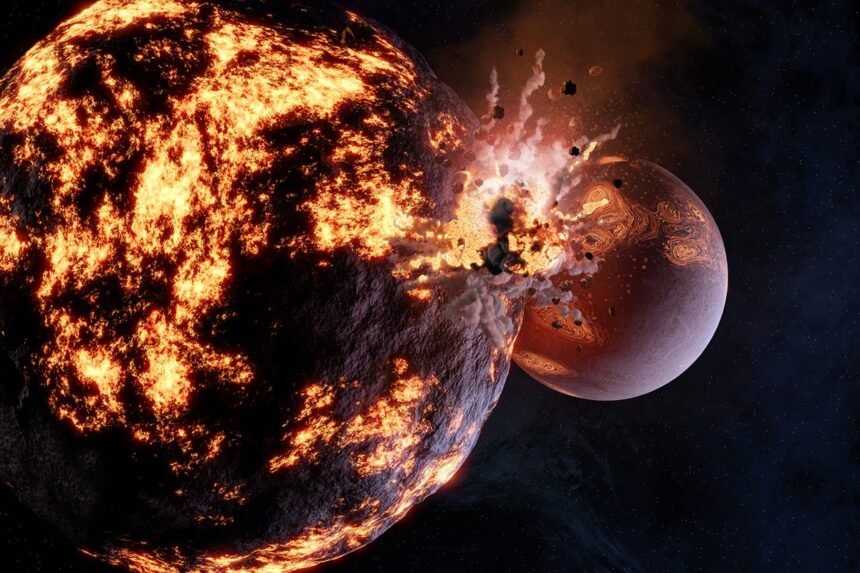
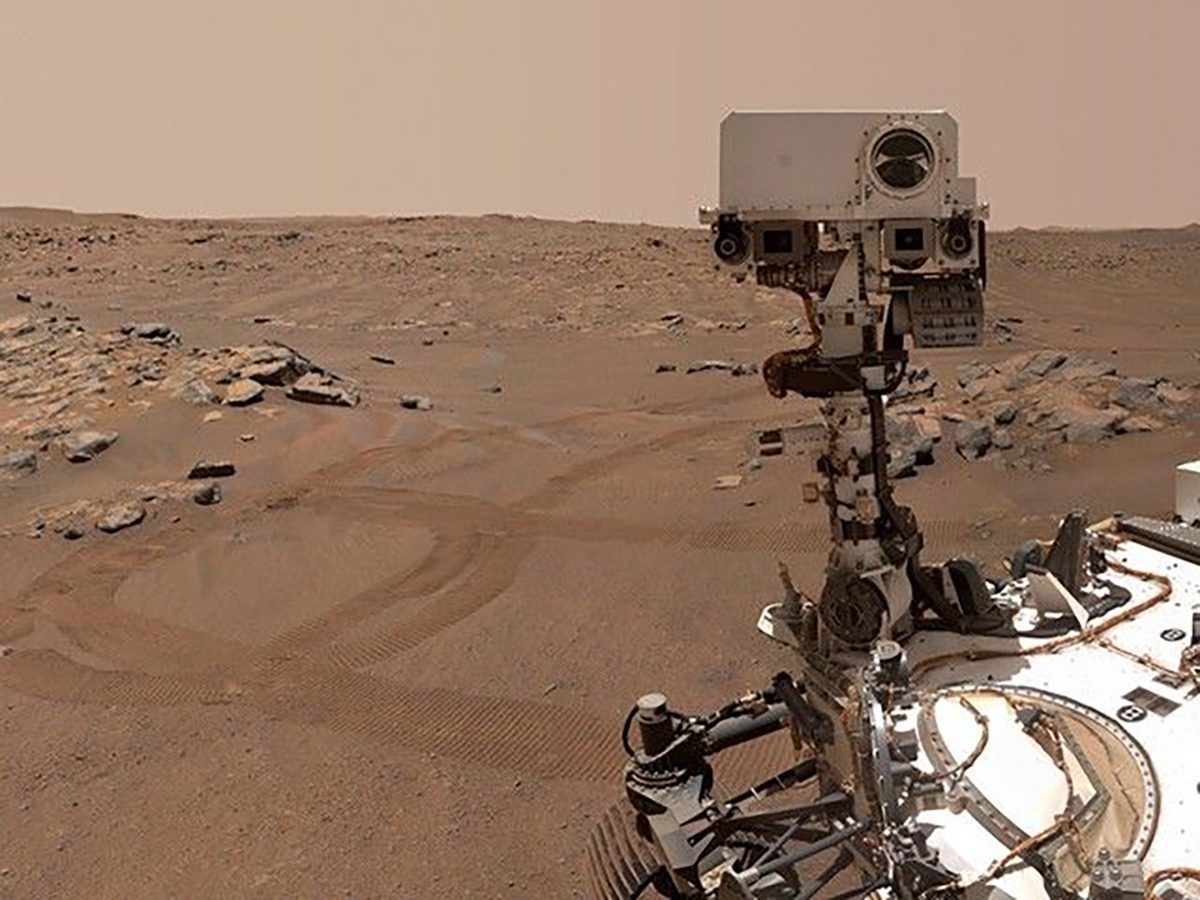
A robotic NASA rover on Mars has found evidence of repeated asteroid impacts on the Red Planet that could rival the asteroid that killed the dinosaurs on Earth.
NASA’s Perseverance Mars rover uncovered evidence that a 245-foot-thick (75 metre) pile of ancient rock was formed by asteroids repeatedly smashing into Mars throughout the planet’s early history.
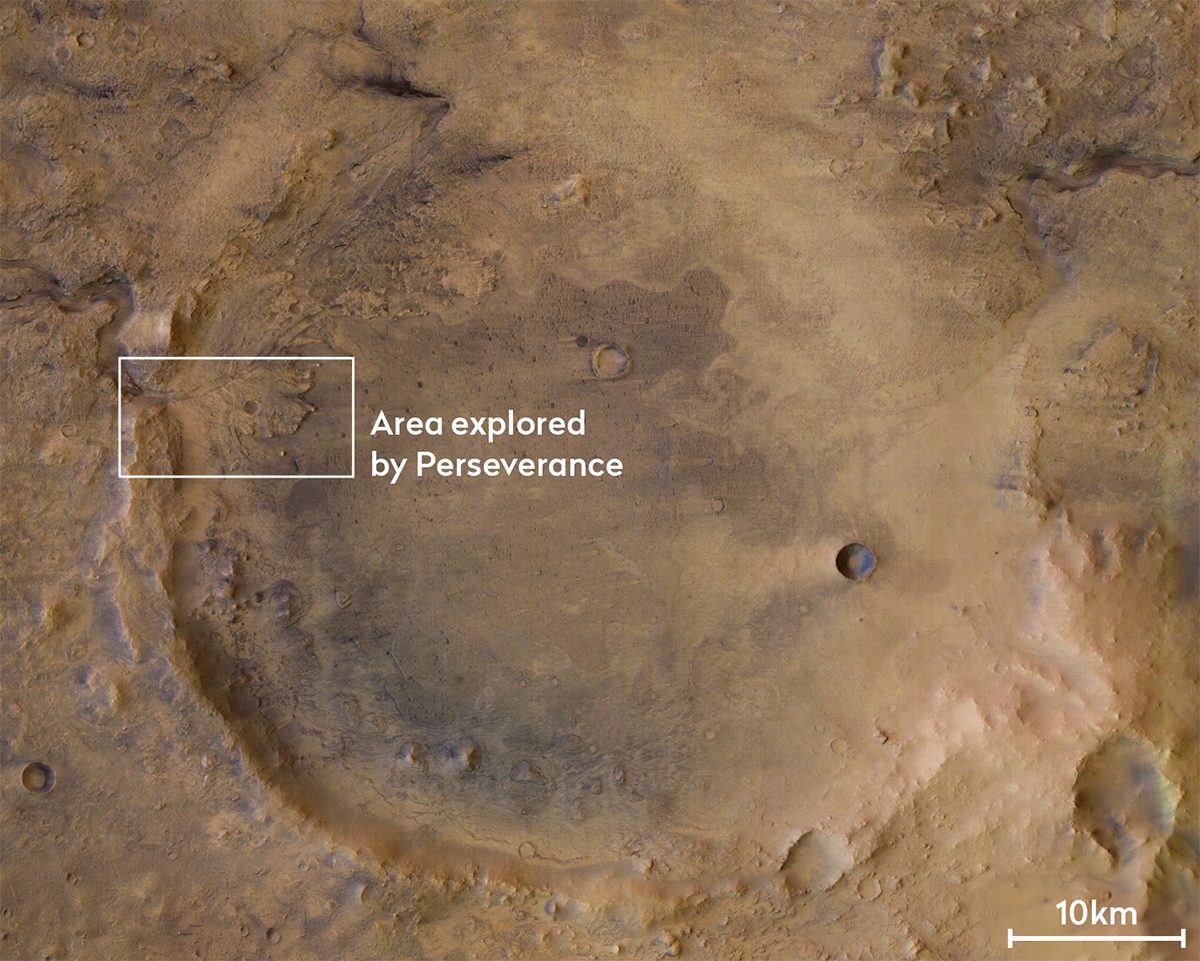
The discovery was made on the rim of Jezero Crater, an area that was selected for the Perseverance mission because it’s the site of an ancient lake and river delta..
Now Perseverance has made one of its most important discoveries, giving planetary scientists a window into one of the most chaotic, destructive periods in Mars’s history.
An ancient impact almost as old as the Solar System
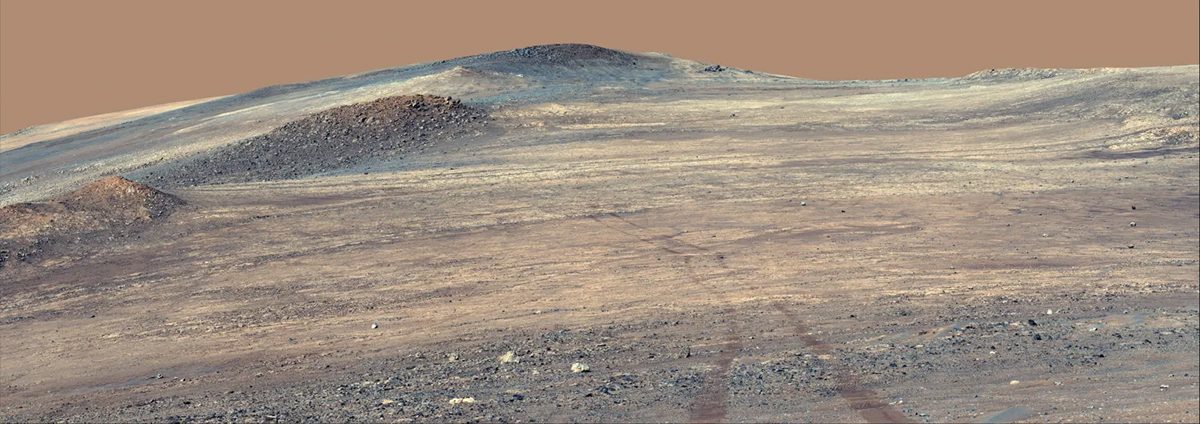
Referred to as the ‘Broom Point member’ by the Perseverance science team, the layered bedrock discovered by the rover is likely more than 3.9 billion years old, according to NASA.
For reference, the Solar System itself is about 4.5 billion years old. That makes it among the oldest terrain ever examined by a Mars rover.
“Since leaving Jezero, Perseverance has been exploring a brand-new frontier, both geographically and geologically – a chapter of Martian time that predates the crater itself,” says Ken Farley, Perseverance deputy project scientist at Caltech.
“On Earth, our earliest geologic history has been fundamentally broken up, deformed and erased by plate tectonics.
“Because Mars lacks plate tectonics to recycle its crust, this ancient record remains intact, giving us a rare glimpse into a geological time period that doesn’t exist on our own planet.”
A geological detective on Mars
In late 2024, Perseverance ascended the rim of Jezero Crater, leaving the region behind, and began examining the surrounding locations.
The rover is equipped with science instruments that enable it to photograph and analyse rocks and other materials on the surface of Mars.
This information is then beamed back to scientists on Earth, who use it to make discoveries pertaining to Mars’s ancient history.
In this case, the data gathered by Perseverance at Broom Point revealed six distinct rock types.
That includes breccias — rocks composed of angular fragments — alternating with layers of fine-grained, pulverised rock dust.
Scientists say rock fragments found within the breccias are filled with gas-bubble cavities, which suggests they were once molten.
Perseverance also found small, dark glassy beads within the layers. That, says NASA, gives scientists strong evidence that they formed primarily from asteroid impacts.
NASA says the largest beads would rival those flung out by the Chicxulub asteroid when it impacted Earth, killing the dinosaurs.
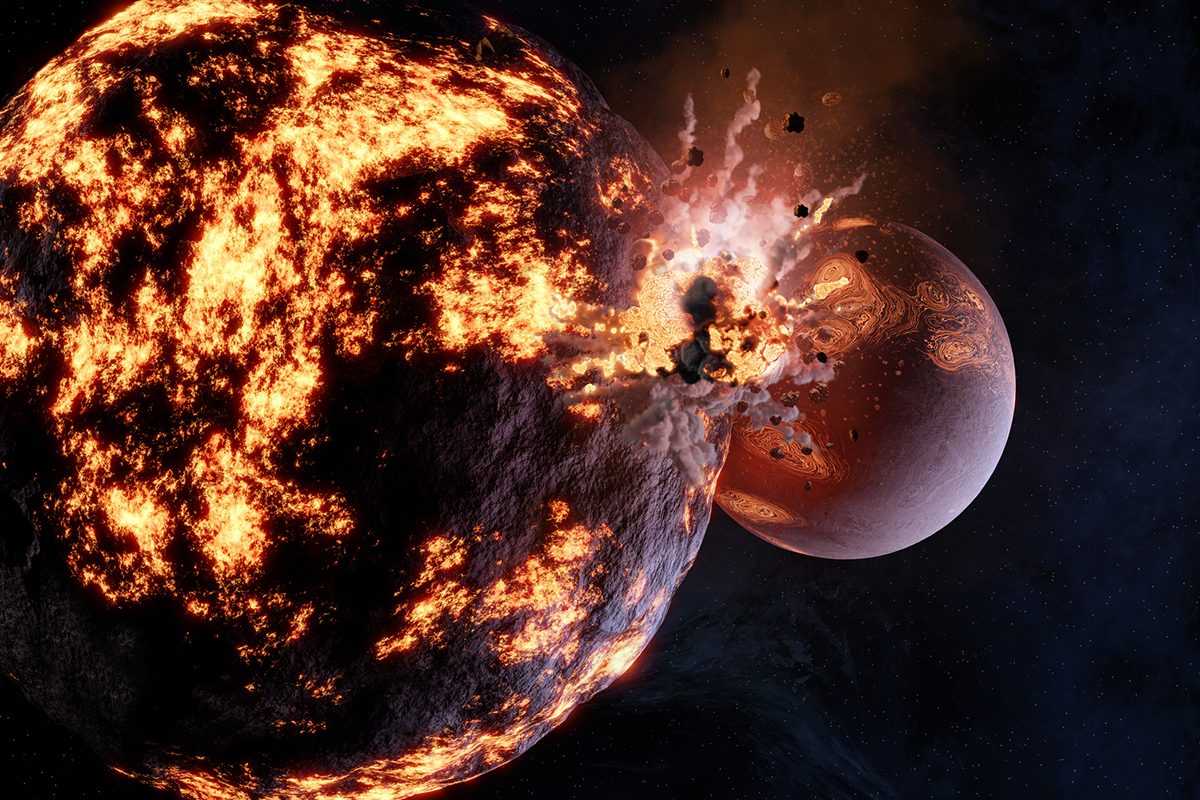
What’s more, the layering reveals a repetition of distinct rock types multiple times throughout, suggesting that high-energy asteroid impacts occurred repeatedly in this region of early Mars.
“The different rock layers are a record of variable-sized impacts occurring at different distances from where this rock sequence was accumulating,” says Alex Jones at Imperial College London and lead author of the paper.
“Some large impacts took place very far away, some small impacts nearby. Their debris all ended up landing here, constructing this thick section of rock.”
The team say the layers could even suggest interaction with water or ice.
One-two punch
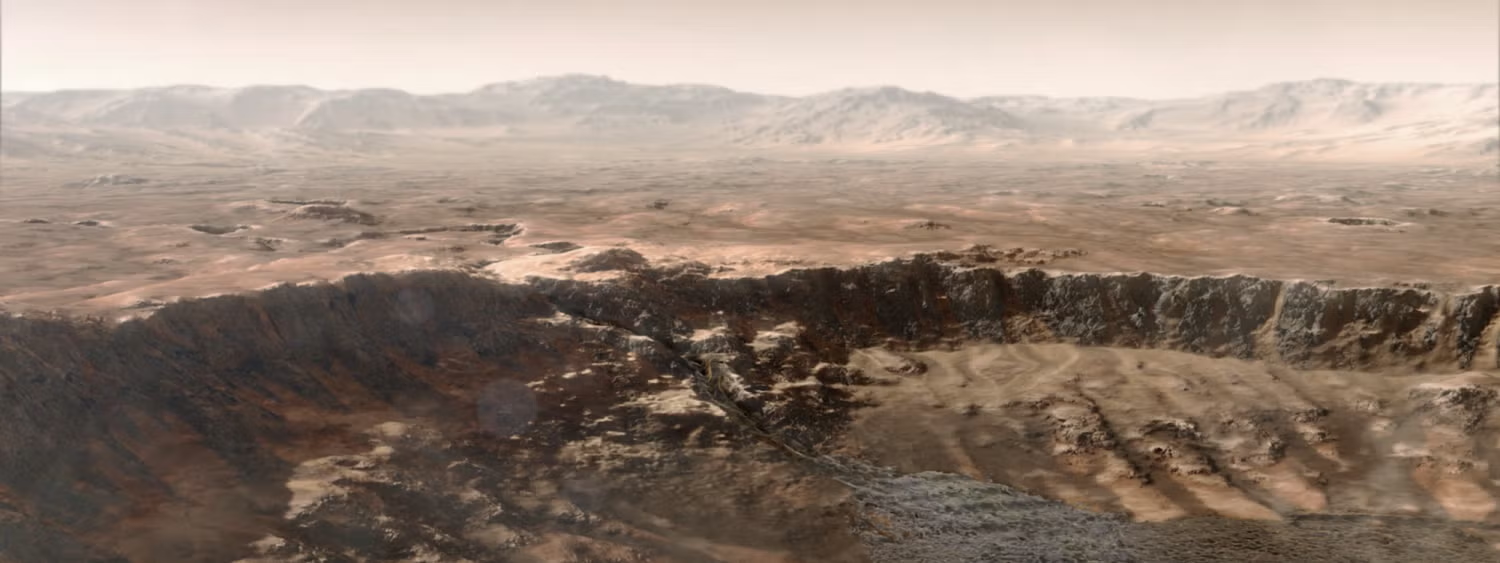
The team suspect what they call a ‘one-two punch’ may have shaped the landscape.
An initial asteroid impact produced the 1,900-km-wide (1,200 miles) Isidis Basin, which is one of the largest impact basins on Mars. That upended and tilted the rock layers.
Then a second asteroid hit, forming Jezero Crater, which is 45km (28 miles) wide.
That second hit fractured and uplifted the tilted rocks into the formations seen today.
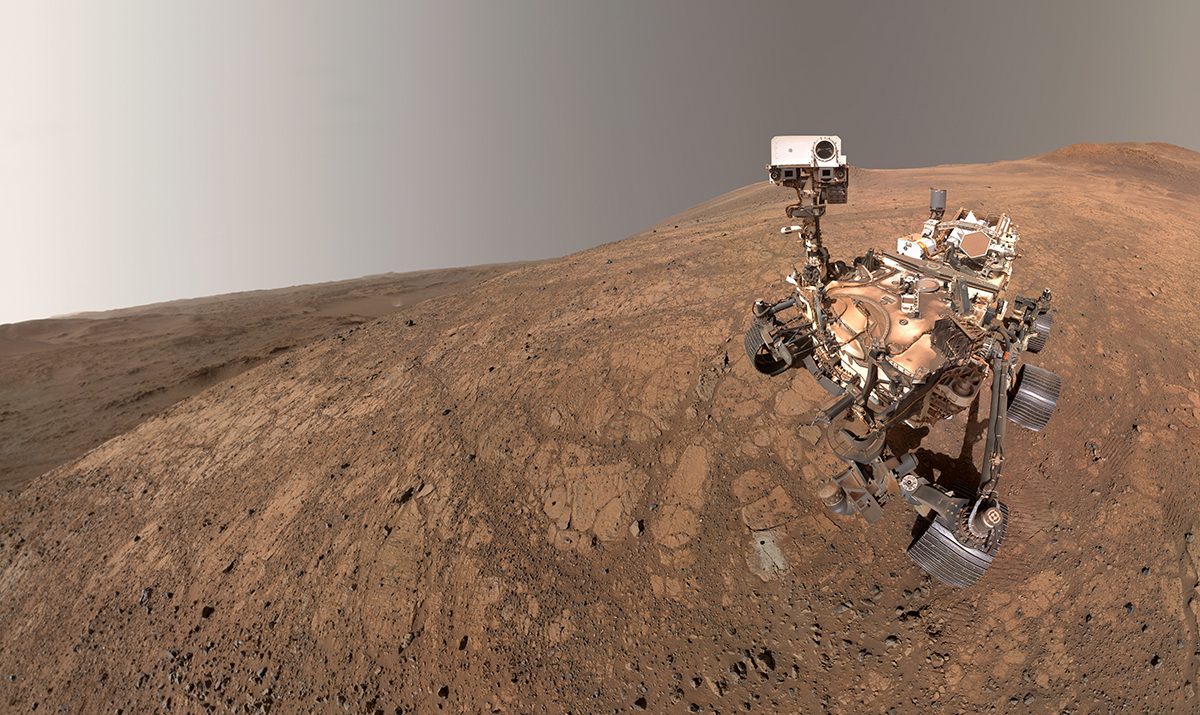
The Perseverance team tasked the rover with collecting two samples from the area so that, should a future mission be able to return them to Earth, lab dating could determine when and how often impacts occurred on early Mars.
“During this violent era, it wasn’t rain or snow falling from the sky, but an almost constant barrage of molten rock droplets and pulverised dust kicked up by asteroid impacts,” says Jones.
“If we can pin down the ages of these layers, it would be like reading a cosmic weather report from 4 billion years ago.”
Disclaimer: This content has not been generated, created or edited by Finance SC. Publisher:
Source link
Source link