



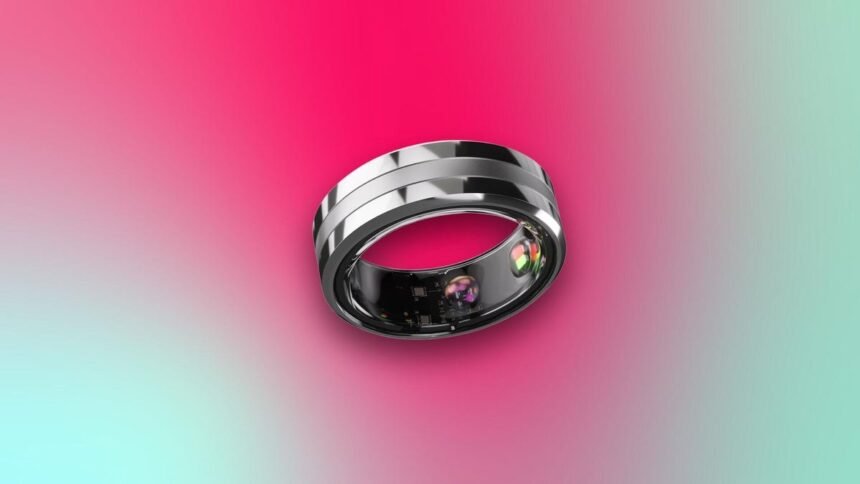
A brand-new smart ring, the Signal Ring, launched Thursday with an ambitious promise to continuously track blood pressure without an inflatable cuff or calibration. That’s something no other smart ring currently offers.
Designed to work four to five times faster than traditional blood pressure cuff trackers, the Signal Ring, created by startup company Vital Signals, was tested in a 451-person clinical study with additional studies underway, according to a press release announcing the launch. The company says the device, which pairs with an app to provide the readings, meets “the international accuracy standard for blood pressure cuffs.”
According to the US Centers for Disease Control and Prevention, 48.1% of US adults have high blood pressure, which increases the risk of stroke and heart disease. If the Signal Ring proves successful, it would be a convenient, less disruptive way for people with hypertension to regularly monitor their blood pressure.
Despite the company’s claims of accuracy, health experts have doubts about the upcoming device. Though Vital Signals has not disclosed the exact technology used in the ring, Dr. Lindsey Rosman, assistant professor of medicine in the Division of Cardiology at the University of North Carolina School of Medicine, believes it likely uses PPG (photoplethysmography) light sensors, which have known limitations in delivering accurate results.
“Motion can distort the signal, darker skin tones absorb more light and can produce a weaker signal, cold fingers or poor circulation alter blood flow independent of actual blood pressure, and irregular heartbeats can distort the waveform,” Rosman said. “Ring fit and finger position add further variability.”
Rosman said she’d like to examine the device’s results and see more rigorous testing to determine the accuracy of the blood pressure readings.
Vital Signals didn’t immediately respond to a request for comment.
How effective is wearable tech for blood pressure?
Until testing is made public, it’s hard to say whether the Signal Ring is the first truly cuffless blood pressure tracker designed for everyday wear.
Other trackers measure blood pressure in a more traditional way, such as the Omron HeartGuide, which inflates a cuff around the wrist to take a reading whenever requested. Wearables like the Oura Ring and Apple Watch use health metrics and trends to detect potential changes in cardiovascular health that may indicate hypertension, but they don’t claim to replace traditional blood pressure cuffs.
The problem is that inaccurate heart data can trigger “unnecessary worry or false assurance,” Rosman said. She noted that even in-person clinical settings can have flaws in blood pressure readings, skewed by anxiety during doctor visits, known as white-coat hypertension.
If the Signal Ring can demonstrate consistent accuracy, however, it could mark a meaningful advance, helping users spot potential issues earlier and better tailor treatment.
“Continuous data could reveal patterns a single reading misses, such as nighttime patterns, response to stress or medication, trends over weeks,” Rosman said.
The Signal Ring is available for a one-time purchase, with no additional subscription fee. Preorders for the Signal Ring are now available for $399, and initial shipments are expected to begin in October. Similarly to the Oura Ring, the Signal Ring has not been reviewed or cleared by the FDA.
“Patients should talk to their doctor about whether and how to monitor their blood pressure, and how any device fits into their overall hypertension management plan, rather than adopting new tools on their own,” Rosman said.
Disclaimer: This content has not been generated, created or edited by Finance SC. Publisher:
Source link
Source link