



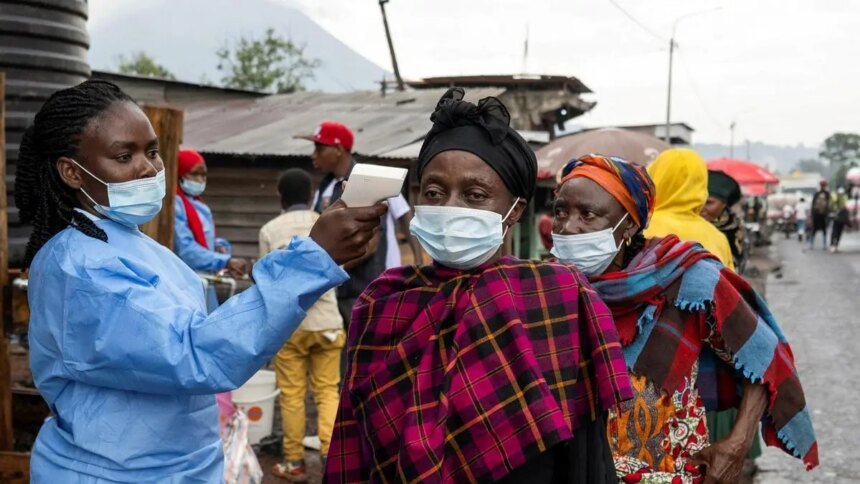

As of July 30, the DRC had reported 3,605 confirmed cases and 1,587 deaths (file photo)
| Photo Credit:
ARLETTE BASHIZI
The World Health Organisation (WHO) has warned that the ongoing Ebola outbreak in the Democratic Republic of the Congo (DRC) is spreading at an “exceptional pace,” with the number of infections and deaths continuing to rise despite an intensified international response.
Widening Outbreak
In its latest Disease Outbreak News released on Friday, the WHO stated that the outbreak, which was initially confined to the Mongbwalu health zone in Ituri province, has spread over the past two months to 49 health zones across five provinces: Ituri, North Kivu, South Kivu, Haut-Uélé, and Tshopo.
Ebola virus disease is a rare, severe, and often deadly illness caused by orthoebolaviruses (formerly ebolavirus) that leads to viral haemorrhagic fever. It spreads through direct contact with infected bodily fluids and primarily occurs in sub-Saharan Africa.
As of July 30, the DRC had reported 3,605 confirmed cases and 1,587 deaths, with another two cases diagnosed in the DRC but treated in Germany. Including cases reported in Uganda and France, the cumulative total stands at 3,626 confirmed cases and 1,589 deaths. WHO said at least 651 people in the DRC and 18 in Uganda have recovered.
This outbreak is now the largest recorded Ebola virus disease outbreak in the country, surpassing the previous largest outbreak, which occurred from 2018 to 2020 and resulted in 3317 confirmed cases.
WHO noted that since its previous Disease Outbreak News on July 17, the DRC has recorded 1,481 additional confirmed cases and 759 confirmed deaths. While part of the increase reflects expanded surveillance, enhanced laboratory testing and improved diagnostic capacity, the agency said. “Most of the increase reflects the expansion of the outbreak.”
The organisation said Congolese health authorities, working with WHO and other partners, are continuing emergency response measures, including disease surveillance, laboratory testing, infection prevention and control, clinical care, community engagement and logistics support. However, it stressed that a substantial scaling up of response activities is needed to get ahead of the outbreak.
WHO said a regional preparedness framework remains in place to support countries across Africa at risk of cross-border transmission.
The update also noted that Uganda officially declared its Bundibugyo virus disease outbreak over on July 28, after completing 42 days without a new locally transmitted case following the discharge of the last confirmed patient on June 16. The most recent imported case was discharged on July 16 after testing negative twice. WHO said it will continue to monitor Uganda for another 42 days to ensure that it does not miss any transmission chains.
Despite Uganda’s success in containing its outbreak, the WHO warned that the country remains at risk of imported infections because of ongoing transmission in neighbouring DRC and called for heightened surveillance, preparedness and cross-border control measures.
Risk assesment
In its latest risk assessment, WHO said the risk remains very high within the DRC because of the continued expansion of the outbreak into new health zones. It assessed the risk as high for Uganda and other countries sharing land borders with affected areas, citing sustained cross-border movement linked to trade and mining activities. The risk for the rest of Africa and globally remains low.
WHO reiterated that it does not recommend any restrictions on travel or trade with affected countries and urged governments to strengthen outbreak control, surveillance, preparedness and cross-border collaboration to prevent further regional spread.
Published on August 2, 2026
Disclaimer: This content has not been generated, created or edited by Finance SC. Publisher:
Source link
Source link