



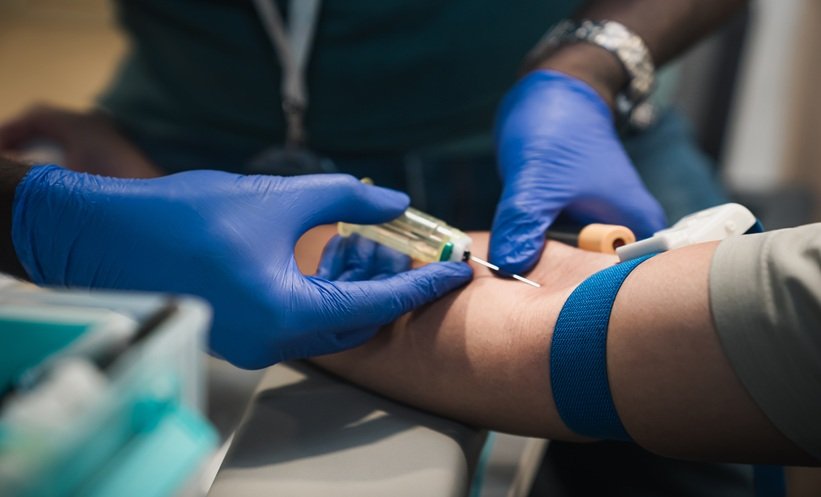
SHARP object injuries exposed healthcare workers and medical students to blood-borne pathogens across a 10-year hospital study.
Researchers retrospectively examined 771 reported occupational accidents involving sharp objects at a 700-bed tertiary university hospital in Northeastern Greece between 2014 and 2023. The findings highlight persistent exposure concerns, particularly during blood collection and among younger healthcare personnel and medical students.
Blood-Borne Pathogens Identified in Source Patients
The source patient was identified in 710 cases, representing 92.1% of reported injuries. The remaining 61 incidents involved abandoned or improperly discarded sharp objects from unknown sources.
Testing identified hepatitis B surface antigen in 31 source patients, hepatitis C antibodies in 25, HIV in four, and positive Treponema pallidum screening results in eight. Despite these exposures, follow-up monitoring found no occupational seroconversion for hepatitis C or HIV among healthcare workers or medical students.
One healthcare worker and one medical student received HIV post-exposure prophylaxis after exposure to source patients who tested positive for HIV.
Blood Collection Drives Sharp Object Injuries
Blood sampling or arterial blood gas collection accounted for 360 injuries, or 46.7% of all reported accidents. A further 127 incidents occurred after blood collection, while 75 happened during needle recapping.
Hollow-bore needles caused 83% of documented injuries. Internal medicine departments accounted for 49.9% of incidents, followed by surgical departments at 33.5%.
Physicians recorded the largest number of injuries among healthcare workers. However, final-year medical students consistently had the highest annual injury prevalence relative to the number of individuals in each professional group, reaching 39% in 2023.
Personnel aged 40 years or younger accounted for 74.2% of incidents. The researchers suggested that limited clinical experience, developing technical skills, and frequent performance of invasive procedures may contribute to the higher frequency among younger personnel and students.
Prevention and Documentation Gaps Remain
Most healthcare workers and medical students demonstrated immunity to hepatitis B. However, 44.5% of records did not document what immediate measures were taken following an injury.
The findings support stronger clinical training, reliable reporting systems, safety-engineered devices, and standardized post-exposure procedures. Comprehensive injury registries may also help institutions identify vulnerable groups and evaluate occupational safety practices over time.
The single-center design and reliance on reported incidents may limit generalizability, particularly because unreported needlestick injuries were not captured.
Reference
Gkirtsou C et al. Occupational accidents caused by sharp objects among healthcare workers and medical students: a retrospective observational study. Cureus. 2026;18(6).
Featured Image: CSJ STUDIO on Adobe Stock.
Disclaimer: This content has not been generated, created or edited by Finance SC. Publisher:
Source link
Source link