



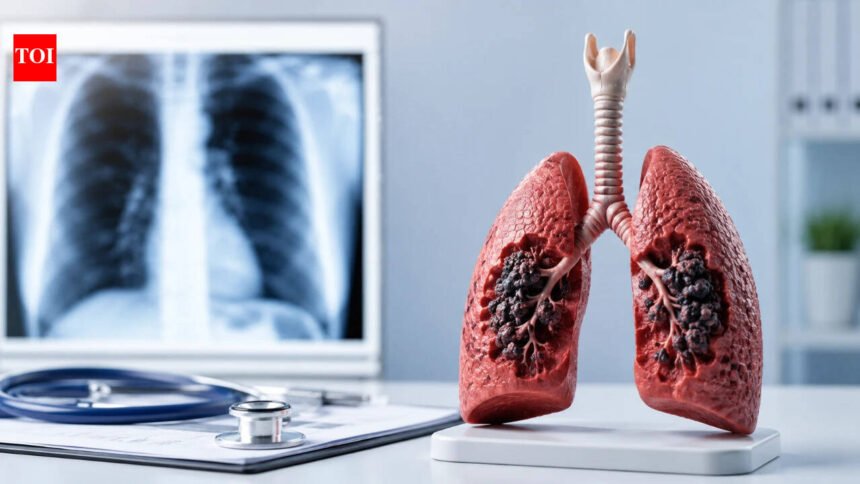
Lung cancer can stay quiet for a surprisingly long time. By the time cough, breathlessness, chest pain or unexplained weight loss appear, the disease may already have progressed.That is why screening is different from testing someone who has symptoms. It looks for cancer before there is a reason to suspect it. But screening is not meant for everyone, and choosing the right people matters.
Who should consider screening?
Dr Tejinder Kataria, Chairperson – Radiation Oncology, Medanta Hospital, Gurugram, said, “Those aged between 50 and 80 years and who are current or former smokers with a lung cancer history of 20 pack-years should be checked with a low-dose CT scan at least once a year.”A pack-year measures lifetime smoking exposure. One pack a day for 20 years equals 20 pack-years. So does two packs a day for 10 years.The US Preventive Services Task Force recommends annual low-dose CT screening for adults aged 50 to 80 who have at least 20 pack-years and either currently smoke or quit within the past 15 years.
Why low-dose CT, not a routine X-ray?
Screening works best when it can spot small changes before symptoms become obvious. Low-dose CT, or LDCT, creates detailed images of the lungs using less radiation than a standard diagnostic CT scan.Dr Kataria explained, “LDCT can identify tiny lung tumors before they begin to manifest any symptoms.”Research supported by the US National Cancer Institute found that LDCT can be used to screen people with a history of heavy smoking and helped establish its role in early detection.Still, a scan is not a verdict. Some lung nodules are harmless. Finding one can lead to repeat scans, further tests and considerable anxiety.
What about people who never smoked?
This is where lung cancer screening needs a little more nuance.Dr Vikas Mittal, Director – Pulmonologist, CK Birla Hospital®, Delhi, said, “Many people wrongly believe that lung cancer only strikes smokers. However, the increasing incidence of lung cancer among non-smokers amply illustrates the importance of awareness and timely diagnosis.”He added that pollution, occupational exposures and genetic factors may contribute to lung cancer risk.However, routine LDCT screening is not currently recommended for every non-smoker. For someone who has never smoked, persistent cough, breathlessness, unusual chest sensations or unexplained weight loss should prompt a medical evaluation rather than an automatic screening scan.
Other risks deserve a conversation
Smoking history is the clearest screening criterion, but it is not the only factor doctors consider.A person with a family history of lung cancer, previous radiation to the chest, asbestos or other workplace exposures, significant pollution exposure or certain existing lung diseases may have additional risk.Dr Kataria said such people “should talk to a doctor about their risk factors for lung cancer.”That conversation matters because screening has benefits, but it can also produce false alarms and unnecessary procedures. It should be targeted at people most likely to benefit.For current smokers, screening should never replace quitting. Stopping smoking remains one of the most important ways to reduce future lung cancer risk.Medical experts consultedThis article includes expert inputs shared with TOI Health by:Dr Tejinder Kataria, Chairperson – Radiation Oncology, Medanta Hospital, Gurugram.Dr Vikas Mittal, Director – Pulmonologist, CK Birla Hospital®, Delhi.Inputs were used to explain who should undergo lung cancer screening, why early detection matters, and which high-risk groups should discuss low-dose CT with a doctor.
Disclaimer: This content has not been generated, created or edited by Finance SC. Publisher:
Source link
Source link