



Generative AI tools such as Apple Intelligence are quickly becoming part of everyday life.
According to Prescient AI findings, Apple Intelligence alone is now available on more than 940 million devices, with around 410 million people using it daily.
That means when Apple opens its annual Worldwide Developers Conference (WWDC) on June 8, it will be speaking to users who already spend much of their day inside AI-assisted workflows.
As people grow more used to relying on AI, they also begin expecting the same level of speed, convenience, and responsiveness from every other digital product they use.
Development teams outside Apple’s ecosystem are feeling that pressure too, because users now compare every digital experience they have.
It’s a scenario that Quixta, a leading website and software development agency, believes WWDC 2026 will bring further into focus as digital product standards continue to evolve.
“When Apple deepens AI integration at the OS level, it raises the bar across the board,” explains Anand Ashok, Founder of Quixta.
“Teams that understand what these changes mean for UX and architecture will be the ones setting the standard while everyone else scrambles to catch up.”
YouTube channel, MacRumors, delves into what users can expect to come out of WWDC in the video below:
How WWDC 2026 Is Changing UX Expectations
Reuters reports that WWDC 2026 is expected to focus heavily on AI capabilities, software updates, and developer tools as Apple expands its Apple Intelligence ecosystem.
Apple has spent years turning software features into consumer habits. What begins inside the company’s ecosystem often spreads outward as users start expecting the same convenience, speed, and continuity everywhere else.
Reports have also pointed to deeper Siri upgrades and broader AI integration across apps, workflows, and devices.
Users are quick to adapt to products that remove friction. Once AI-assisted workflows become routine on one platform, people become less patient with manual experiences everywhere else.
“Someone using contextual search, predictive assistance, and AI-supported workflows throughout the day notices immediately when another product creates unnecessary effort,” Ashok adds.
“Most users never describe the issue as poor UX. They simply stop engaging.”
The Interaction Design Foundation tells us why UX is important to keep users engaged:
Apple AI Is Changing User Expectations
Apple continues positioning AI as part of the interface itself instead of a separate destination or tool.
Writing assistance, image editing, recommendations, search refinement, and workflow suggestions all now sit inside actions people already perform every day.
Here, the intelligence feels built into the experience instead of layered on top of it.
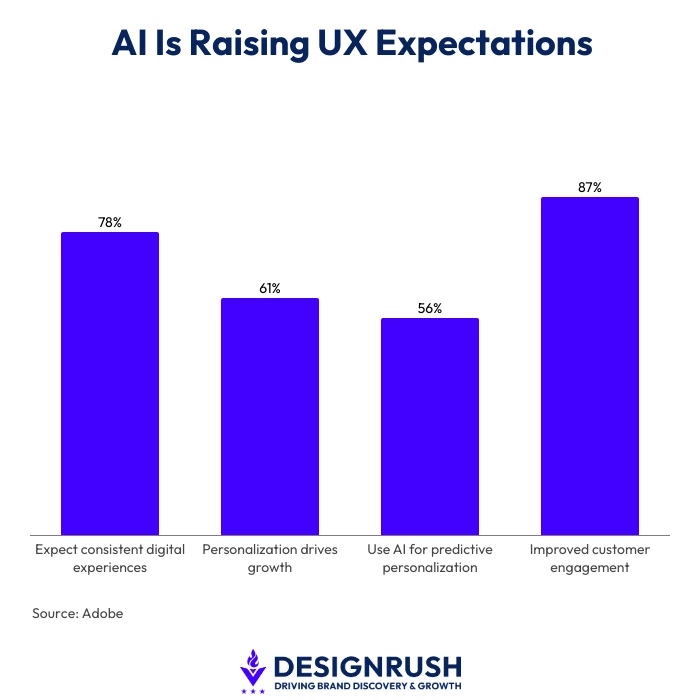
Users now expect software to do more work for them, with Adobe finding that 78% of customers want consistent experiences across digital channels.
Adobe adds that 61% of senior executives see personalized experiences and deeper engagement as critical for growth.
Meanwhile, 56% of advanced generative AI users in marketing and CX already use data and analytics to predict customer needs and personalize web experiences.
Among organizations using AI-driven personalization, 87% have already seen improvements in customer engagement.
“The companies moving fastest are designing products where AI removes friction quietly in the background,” Ashok says. “Users respond to experiences that feel adaptive instead of reactive.”
Teams are now being pushed to rethink basic parts of the user experience:
- Where workflows repeatedly stall
- Where users repeat unnecessary actions
- Where interfaces can anticipate intent before someone asks
Why Cross-Device UX Now Matters
WWDC 2026 is also expected to expand Apple’s ecosystem continuity across iPhone, iPad, Mac, and visionOS.
Apple has spent years shaping the way people use technology day to day.
Once users get used to a certain level of speed, convenience, and continuity inside Apple’s ecosystem, they naturally begin expecting the same experience everywhere else.
That is where users start noticing the cracks.
Someone moving from their phone to a desktop notices immediately when progress disappears, sessions reset, or they have to start a task all over again.
Unfortunately, responsive design alone no longer fixes that problem.
Users now expect experiences to stay connected across devices, with everything picking up exactly where they left off.
“Development teams are no longer designing for isolated screens,” Ashok explains. “They are designing for connected ecosystems where users expect continuity by default.”
The video below breaks down why Apple reigns king in cross-device UX:
Why Speed Still Shapes User Trust
Seamless experiences still fail when products feel slow or unstable.
Reuters suggests that Apple’s upcoming software releases may place greater emphasis on refinement, stability, and performance alongside new AI functionality.
Feature expansion without performance discipline creates friction faster than most companies realize.
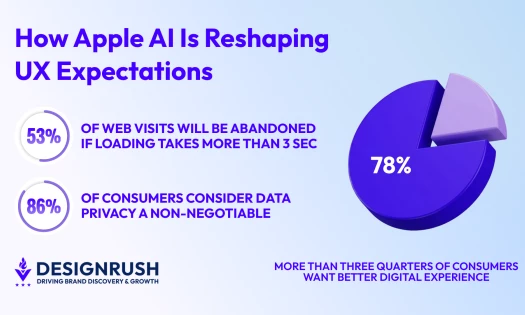
Google states that 53% of web visits are likely to be abandoned if pages take longer than three seconds to load. Likewise, delays in speed also reduce engagement, conversions, and retention.
“Performance decisions shape perception long before users think about infrastructure or engineering,” Ashok says.
“Products that feel fast and stable create confidence, while products that feel delayed or inconsistent create doubt.”
YouTube channel, NNgroup, explains how to build trust in UX:
Why Privacy Now Shapes UX
Apple’s AI strategy has leaned heavily on privacy architecture, including on-device processing and Private Cloud Compute systems designed to limit unnecessary data exposure.
Users increasingly evaluate products through the same lens. Research conducted by Thales found that 86% of consumers expect some level of data privacy rights from the companies they interact with online.
Privacy now directly influences user experience.
Permissions, transparency, data collection practices, and local processing shape whether products feel trustworthy during everyday use.
“Teams that address those decisions early build fundamentally different products from teams treating privacy as a legal review near launch,” Ashok adds.
The webinar below discusses why it’s important for UX designers to embed privacy into every design project:
What WWDC 2026 Means for Development Teams
WWDC is an indicator of where user expectations are heading next.
The takeaway here is not to replicate every Apple feature, but to understand how quickly consumer habits reshape digital standards across industries.
Teams building customer-facing products now face pressure on multiple fronts at once. Users expect software to feel faster, more connected, more responsive, and more aware of context than it did even a year ago.
Ashok says that this raises bigger questions for product and business leaders to answer:
- Which parts of the user journey still create unnecessary effort?
- Where does the product feel disconnected across devices?
- Which experiences still rely too heavily on manual actions?
- And how much friction are users tolerating before they leave?
Addressing the answers to these questions is critical, particularly as WWDC 2026 is a preview of where user expectations are heading next.
“The companies paying attention to their UX development journeys now will be shaping those standards while the rest will be trying to catch up after users have already moved on,” Ashok concludes.
Disclaimer: This content has not been generated, created or edited by Finance SC. Publisher:
Source link
Source link